-
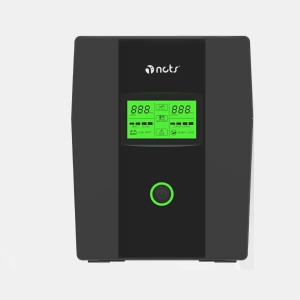
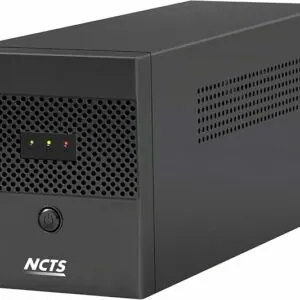
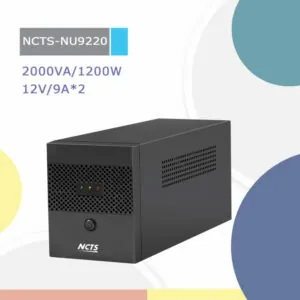
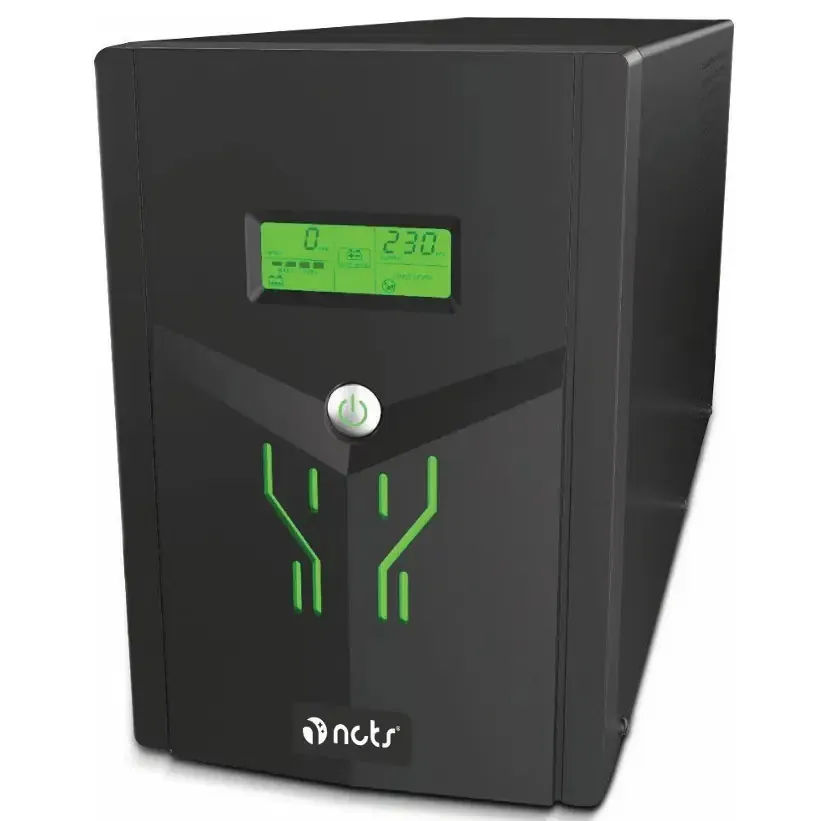
Model: NCTS QSTROM PRO 2000VA
-
Capacity: 2000 VA / 1200 W — supports mid-range PCs, workstations, routers, small servers, etc.
-
UPS Type: Line-Interactive (with AVR) — stabilizes voltage without instantly switching to battery.
-
Output Waveform: Simulated Sine Wave — suitable for most electronics (not pure sine, so heavy inductive loads may be less ideal).
-
Input Voltage Range: ~81-145 VAC / 162-290 VAC (wide range with AVR).
-
Frequency: Auto-sensing 50/60 Hz.
-
Transfer Time: ~2–6 ms (up to ~10 ms max) when switching to battery.
-
Batteries: Dual 12 V × 9 Ah sealed lead-acid (24 V system).
-
Recharge Time: ~6-8 hours to ~90 %.
-
Display: LCD panel showing input/output voltages, load %, battery level, and alerts.
-
Protections: Overload, short-circuit, overcharge/discharge protection.
-
Noise Level: Under ~55 dB — reasonably quiet for home/office.
-
Dimensions: ~380 × 158 × 198 mm.
-
Weight: ~10.5 kg.
🔍 Features & What It Means
-
Automatic Voltage Regulation (AVR): Helps even out brownouts and surges without using battery power — prolongs runtime.
-
Simulated Sine Wave Output: Works great for PCs, consoles, routers, etc., but some sensitive gear (like certain servers or medical equipment) may prefer pure sine wave.
-
Fast Transfer Time: Quick switchover helps prevent crashes during short outages.
-
Generator Compatibility & Off-Mode Charging: Useful if you run external generators or want to charge the UPS with mains off.
💡 Good For
✅ Desktop PCs & gaming rigs
✅ Home or small office network gear
✅ Workstations & POS systems
✅ Routers and modems
(Not ideal if you require pure sine wave for very sensitive equipment.)
⚠️ Things to Consider
-
Simulated sine wave means not the cleanest possible output — fine for most use cases, but check compatibility with sensitive equipment.
-
Battery runtime depends heavily on load — heavier loads will drain faster.